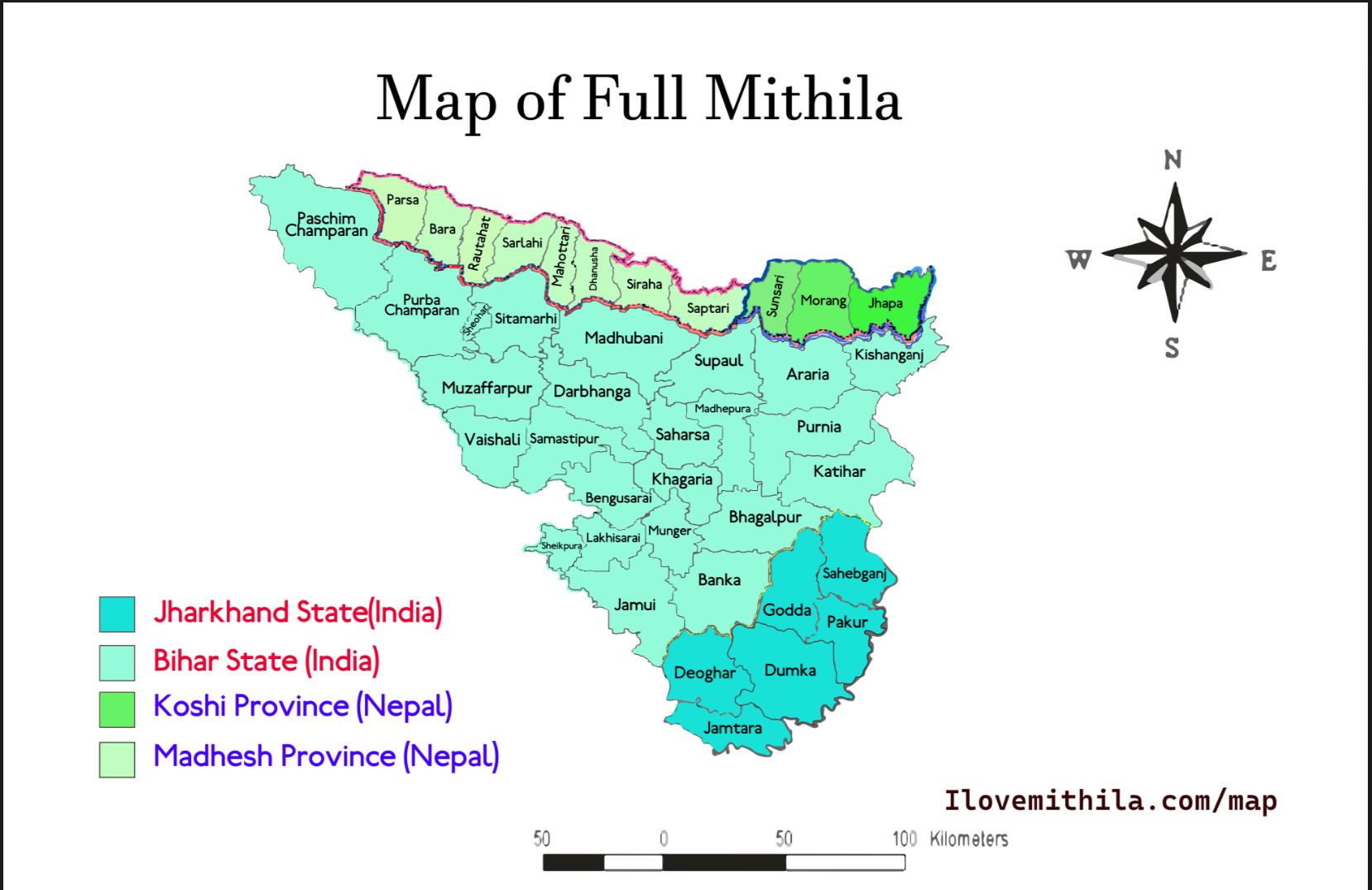
Maithils, also known as Maithili people are an Indo-Aryan ethno-linguistic group native to the Mithila region, which spans parts of eastern India and southeastern Nepal. Bound together by a deep historical legacy, a shared language, and a distinct culinary and artistic tradition, Maithils possess a unique cultural identity that dates back thousands of years.
Geographic Footprint
Language & Script
The defining feature of Maithil identity is Maithili — one of the oldest and richest Indo-Aryan languages.
Maithili is one of the 22 officially recognized languages of India, included in the Eighth Schedule of the Constitution. It is also the second most spoken language in Nepal, reflecting its broad geographic reach.
Historically written in the beautiful Tirhuta script — which shares ancestral roots with Bengali and Assamese. While Devanagari is used today for everyday writing, a strong revival movement is actively working to preserve and promote Tirhuta.
Cultural Pillars
Perhaps the most globally recognized aspect of Maithil culture — vibrant folk art featuring striking geometric patterns depicting nature, wildlife, and scenes from ancient epics. Traditionally painted by women on mud walls, it has earned international acclaim on paper, canvas, and textiles.
Mithila is the birthplace of Sita (Maithili) and philosopher-king Janaka, and significantly shaped ancient Indian philosophy through the Nyaya and Mimamsa schools. The legendary 14th-century poet Vidyapati — the 'Maithil Kavi Kokil' — revolutionized Maithili literature with timeless devotional lyrics.
The Paag headdress symbolizes honor and intellectual heritage, proudly worn at weddings and festivals. Chhath Puja holds profound spiritual significance, alongside Sama Chakeva and Madhushravani. Cuisine celebrates Makhana, fresh river fish, mangoes, and paan — captured in the beloved phrase 'Paan, Maach, aur Makhan.'
Today, Maithils form a vibrant global diaspora, excelling in fields ranging from literature and civil services to technology, academia, and enterprise leadership worldwide — while retaining a strong and proud attachment to their ancestral roots.